Restore a daguerreotype, tintype or cabinet card without touching it
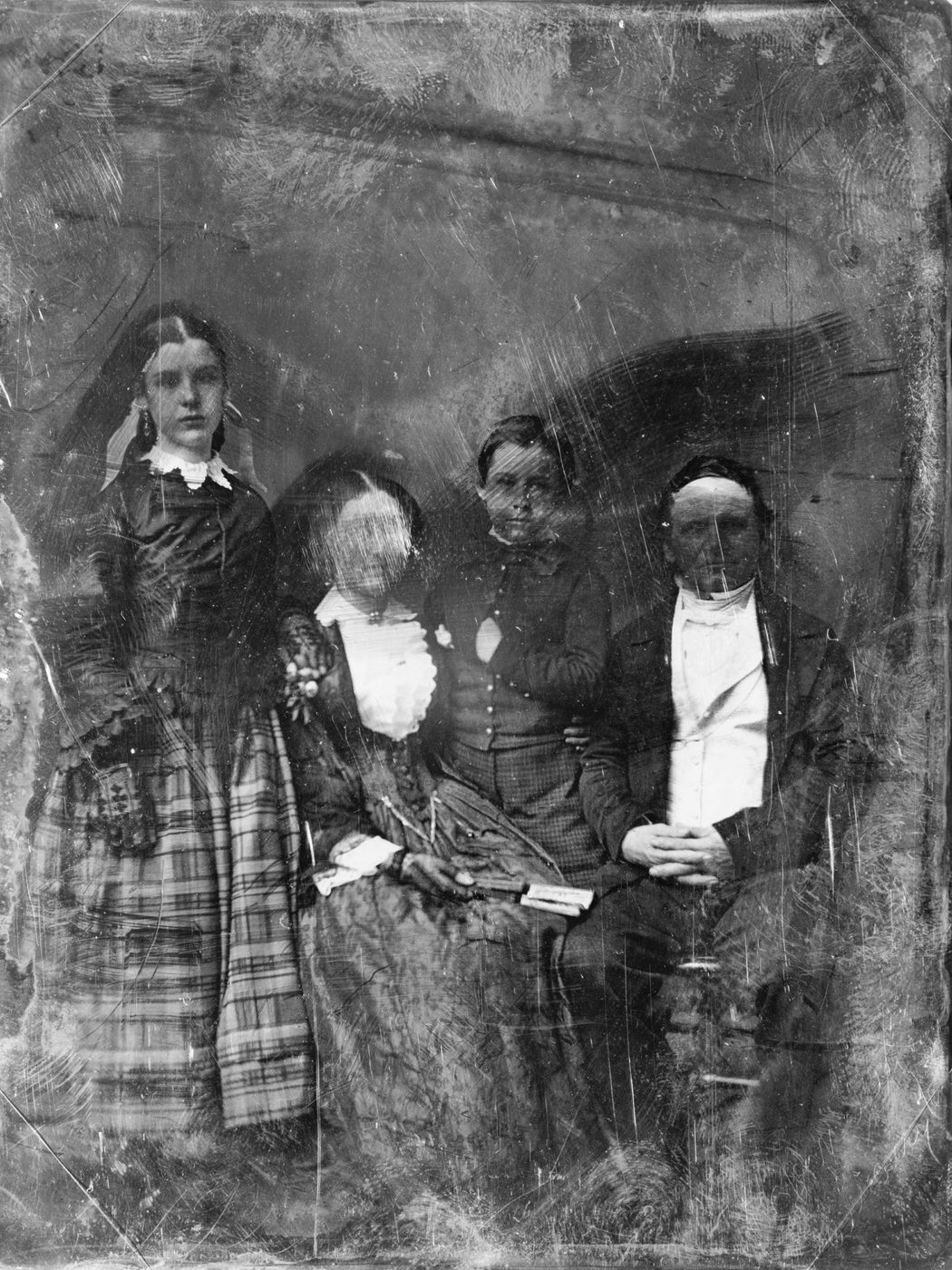
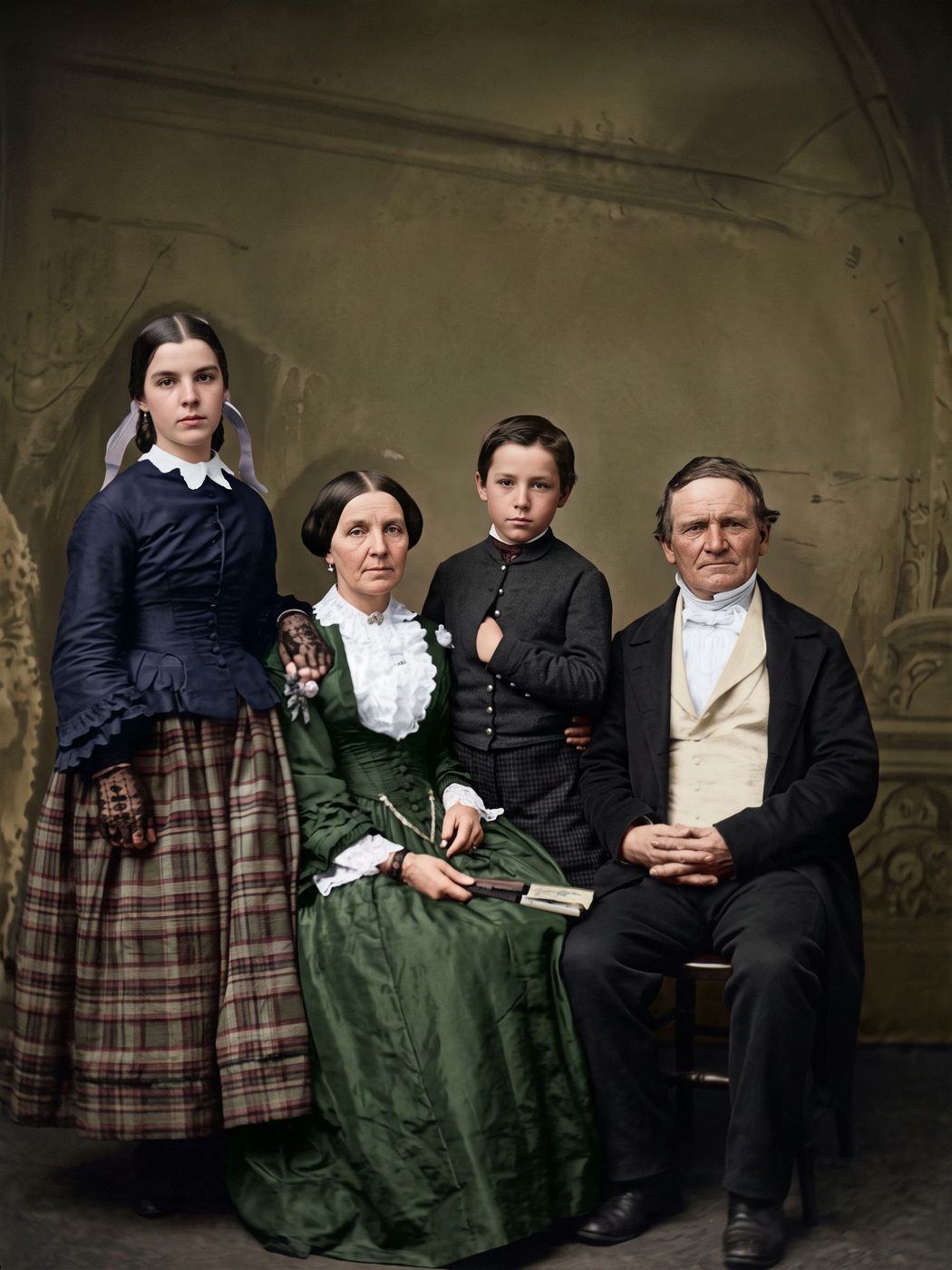
Start with one old photo
Drag a photo or scan here
JPEG, PNG, WebP or HEIC
Your original is never changed. Free previews are deleted after 30 days. We never use your photos to train AI.
The oldest family photos are the most fragile. Take a picture of the plate or card with your phone, and Genizes repairs tarnish, scratches and fading in about 30 seconds. The original stays in its case. Your first preview is free.
Which kind of photo do you have?
A daguerreotype (1840s–1850s) is a mirror-like silver plate, usually behind glass in a small hinged case; its surface tarnishes and can be wiped off by a single touch. An ambrotype is an image on glass, and a tintype (from the 1850s) an image on a thin, dark iron plate that rusts and flakes.
Cartes de visite (small visiting-card portraits, from the 1860s) and cabinet cards (larger, from the 1870s) are paper prints glued to card. They fade, yellow, stain and lose their corners.
Photograph it, don't clean it
Don't open the case, wipe the plate or try any cleaning product: on these photos, damage from cleaning can't be undone. Physical treatment is a job for a photo conservator.
To photograph a daguerreotype, which reflects like a mirror, stand at a window with indirect light, tilt the case slightly and hold something dark behind the phone until the image shows as a positive. Tintypes and cards are easier: lay them flat in soft daylight, without flash, and fill the screen.
What the restoration does
The photo above is a daguerreotype of the Hinckley family, made in 1853 and kept in a public archive. Tarnish, spots and scratches are gone, faces are sharpened, and natural color can be added. One face was lost to the damage; the AI rebuilt it, and the result says so.
Every result carries a note that parts may be AI reconstructions, so the restored copy is never mistaken for the original record.
How it works
Take a picture of the print
Use your phone's camera or upload a scan. Lay the photo flat, avoid glare, and fill the frame.
We repair it
AI removes damage, sharpens faces and adds color. You see a free preview in about half a minute.
Keep it, print it or bring it to life
Download the full-size photo, order it printed and framed, on Christmas cards or on a glass ornament, or turn it into a short clip.
Questions
Is it safe for the original?
Yes. Genizes only works from a picture of it. Nothing touches the plate or the card.
Can a very dark or tarnished plate be restored?
Often, yes, as long as some of the image still shows in your picture. Where the image is completely gone, the AI can only rebuild it, and the result says so.
Can I keep it black and white?
Yes. You can keep it in its original tones or add natural color.
How much does it cost?
Your first preview is free. One full-size photo costs US$3.99 (paid once), and five cost US$9.99. You can also order it framed, on Christmas cards or on a glass ornament.
Pay once. Keep forever.
One photo
Launch offer: 20% off$3.19
First purchase only · until November 30$3.99- 1 full-size photo
- 1 animation
- Best value
Starter
Launch offer: 20% off$7.99
First purchase only · until November 30$9.99- 5 full-size photos
- 2 animations
Printed gift
From $19.00
Free delivery to the US and Canada · taxes included
- Framed print, Christmas cards or glass ornament
- Includes the full-size photo
- Delivered to you or to them